NIH Websites Are Changing
Q&A: Michèle Ramsay, PhD: Africa’s remarkable genetic diversity yields benefits for people worldwide
March/April 2026 | Volume 25 Number 2
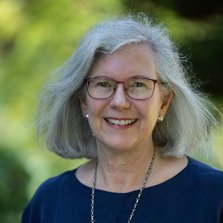 Photo courtesy of Michèle RamsayMichèle Ramsay, PhD
Michèle Ramsay, PhD, is the Director of the Sydney Brenner Institute for Molecular Bioscience and Professor in the Division of Human Genetics, University of the Witwatersrand (Wits), Johannesburg. Her research interests include African population genetic diversity and its contribution to history, health and disease. She is committed to good data governance to ensure that continental African populations can benefit from precision medicine and health approaches to improve life and wellbeing, and to capacity strengthening in genomics and bioinformatics in Africa. She is principal investigator of the NIH-funded Collaborative Center under the Human Heredity & Health in Africa (H3Africa) Consortium and co-investigator for the MADIVA (Multimorbidity in Africa: Digital Innovation, Visualization and Application) research hub of the NIH-funded Data Science for Health Discovery and Innovation in Africa (DS-I Africa) program. Ramsay served as president of the Southern African and African Societies of Human Genetics and the International Federation of Human Genetics Societies.
You studied human genetics. Why?
When I went to university, I did courses in botany and zoology and one of the joint modules was genetics. By the third lecture, I was totally smitten. Since Stellenbosch University only offered a major in genetics in the Faculty of Agriculture, I started off with animal and plant genetics before doing a master's in microbial genetics. Only when I got to the PhD level did I get exposed to human genetics and that’s when I realized that this field is my home.
Why is genetic diversity greatest among African populations?
Our species, Homo sapiens or anatomically modern humans, arose on the continent of Africa about 300,000 to 400,000 years ago. The evidence suggests that the origin of modern humans didn't happen in just one place in Africa, but likely occurred in multiple regions and involved considerable migration and intermixing. Throughout this period, novel genetic variants arose and recombination events accumulated, and there was selection for specific variants due to exposure to environmental factors, including diet, extreme weather, infectious pathogens, and cultural practices. These elements together with random drift added to the diversity of genomes in African populations.
Then, from about 70,000 years ago, different waves of migration from the continent began and each wave took just a small part of the genetic variation with it. Most of the variation remained in people living in Africa today. This is why populations in Africa have such high genetic diversity.
How did your work on H3Africa contribute to your own scientific growth?
H3Africa has had an immense influence on my career. When the funding call came out we formed a brainstorming group at Wits University and as one of the human geneticists in this group, a senior colleague said, “You're the right person to lead this.” This was the start of what became a four-country collaboration and evolved into what we later named the AWI-Gen study, the Africa Wits-INDEPTH (International Network for the Demographic Evaluation of Populations and Their Health) Partnership for Genomic Research. The primary aim was to examine genomic, environmental and behavioral factors influencing body composition and cardiometabolic diseases in African populations. We were one of the eight founding projects and attended the inaugural H3Africa meeting in Addis Ababa, Ethiopia, in August 2012. This was the first time that the AWI-Gen team members from Burkina Faso, Ghana, Kenya and South Africa met in person.
For the first five years, I was co-principal investigator with Osman Sankoh, DSc and INDEPTH director based in Ghana. He taught me a great deal about managing international research collaborations and partnerships. During the second funding period new partners joined the AWI-Gen study and we performed a second wave of data collection and included a sub-study on the human microbiome. The gut microbiome study was the first and largest in Africa, generating data from 1800 continental African participants and revealing thousands of novel bacterial and viral species. The resulting paper was published in 2025 in Nature, which featured it on its cover with beautiful African artwork. The funding for AWI-Gen came to an end in 2024, but we keep working on this extraordinary project that has been the catalyst for new studies and many new ideas.
What makes you most proud?
The small part I have played in enabling the next generation of African genomicists. Our scientific outputs and our papers are meaningful and important in generating incremental knowledge, but the people whose careers we promote along the way are most important in making a meaningful difference, since they build on and amplify the work that we do.
Many of my former students have left South Africa and I'm so proud that they're working on the international stage. I also feel sad that we've had to say goodbye. Many in the African diaspora feel a responsibility toward building scientific capacity on the continent and they have been incredibly supportive of the work that we do.
Just last week, we had a workshop on the genetics of kidney disease in Africa and during dinner I spoke to a young Nigerian scientist who's now working in the UK. When I heard his story, I understood that it would be almost impossible for him to do in Nigeria what he is doing now in the UK. Still, he's thinking about helping those who are still there, by hosting students, working in partnerships, and getting collaborative grants. Probably he'll have more impact in Africa from the work he does in the UK.
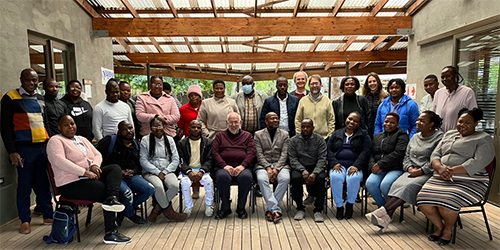 Photo courtesy of Michèle Ramsay
Michèle Ramsay is a member of the MADIVA research team, pictured here meeting with health workers from the Mpumalanga Province in South Africa
Photo courtesy of Michèle Ramsay
Michèle Ramsay is a member of the MADIVA research team, pictured here meeting with health workers from the Mpumalanga Province in South Africa
Why is it important to study genetics in Africa?
We can see interesting examples of genetic adaptation, and these can lead to solutions or therapeutics that are relevant to the rest of the world. For example, high cholesterol is very common among people in high income settings in Europe and North America, but not so much in Africa. Through work that was first done in the African diaspora and later in Africa, we've identified mutations in a gene called PCSK9 that are associated with naturally lower cholesterol levels. Over time we learned exactly what that mechanism is and this has led to a pharmaceutical intervention, PCSK9 inhibitors that significantly lower cholesterol. Today, this intervention is mostly used in European ancestry populations.
The more we study African genomes, the more we will discover in terms of novel therapeutic approaches and new ways of addressing health for everyone in the world. We need more than genetic data to do that. We also need health data, behavioral data, weather data, together with information about diet, infection patterns and cultural norms from different African regions. Then we need skilled researchers, including data scientists, working in Africa to make sense of this multimodal data and mine it for novel insights and opportunities.
Do you have any final words of wisdom for global health researchers?
African populations deserve to be studied in more detail because of the potential to benefit people worldwide. Our challenge, then, is getting data from different parts of Africa to capture the extensive genetic diversity across the continent. I wish to encourage industry and funding bodies to help us build meaningful and large-scale databases and to increase opportunities for Africans to lead the science, while recognising that understanding the local environments and cultures are essential. Good science is so much more than just data! When you understand what’s happening on the ground, you can better translate the work.
Finally, I’m truly excited by the bright young minds I get to work with in an academic setting. We need more entrepreneurs who translate the work that we do into tangible products that benefit communities.
More information
Updated April 17, 2026
To view Adobe PDF files,
download current, free accessible plug-ins from Adobe's website.
Related Fogarty Programs
Related World Regions / Countries