NIH Websites Are Changing
NIH is moving the launch of its new website to the fall to ensure the best possible experience for everyone who relies on our websites for health information, research, funding opportunities, and other resources.
Get the Latest Updates and FAQs
Adapting to a changing global health landscape
May/June 2026 | Volume 25 Number 3
Leadership transitions provide an opportunity to reaffirm an institution’s core values while embracing new perspectives. At the Fogarty International Center, we are undertaking a leadership transition at a time when international biomedical research and global health are experiencing profound transformations. During this period of change, our commitment to advance global health research through capacity building and partnership remains steadfast.
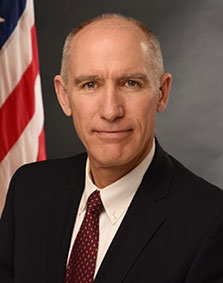 Read recent commentary on global health research issues from current and immediate past directors of the Fogarty International Center.
Fogarty has been truly fortunate to have Dr. Peter Kilmarx as Acting Director. Fogarty’s mission is to support global health research conducted by U.S. and international investigators, to build partnerships between health research institutions in the U.S. and abroad, and to train the next generation of scientists to address global health needs. Dr. Kilmarx’s longstanding commitment to scientific excellence, collaboration, mentorship, and sustained investment in people has reinforced Fogarty’s role as a trusted partner in the global scientific community. NIH’s international programs have helped position the United States as a global leader in biomedical research.
Fogarty has developed an extensive network of trainees and grantees who strengthen scientific capacity and expand the global health workforce. Scientists supported by Fogarty have played critical roles in groundbreaking research supported by the NIH. The enduring value of Fogarty’s investments is evident not only in scientific discoveries, but also in the capacity to respond to new challenges. The individuals and institutions supported by Fogarty are constantly responding to emerging global priorities.
Fogarty’s initiatives promote both scientific excellence and responsible stewardship of U.S. resources. Fogarty and NIH international collaborations strengthen global capacity to detect, prevent, and respond to emerging health threats, thereby supporting U.S. health security. Research conducted across diverse populations also informs the development of vaccines, therapeutics, and diagnostics used in the United States. In this way, global health research and international partnerships yield benefits both abroad and at home.
New Leadership for a Changing Global Landscape
Dr. Steven Schiff, MD, PhD, will serve as the next Director of the Fogarty International Center and the NIH Associate Director for International Research. A pediatric neurosurgeon and scientist with decades of experience, Dr. Schiff has made significant contributions to global health, including research on infectious diseases, neurological disorders, and sustainable health technologies. He has played a key role in advancing global neurosurgery and interdisciplinary research collaborations, and he is a recipient of NIH Director’s Pioneer and Transformative Research Awards.
Dr. Schiff will assume the position of Fogarty’s director at a time when global health research is evolving in significant ways. Global burdens of disease are shifting with many low- and middle-income countries experiencing rising rates of noncommunicable diseases alongside persistent infectious threats, requiring more integrated and multidisciplinary approaches. Advances in data science, genomics, and digital technologies are transforming how research is conducted and how quickly findings can be translated into practice. The global health funding landscape is also evolving, while research institutions in many countries are becoming stronger and making substantial contributions to scientific knowledge.
These shifts underscore the importance of global health capacity building. Training the next generation of scientists remains essential. The skills required are expanding from expertise in traditional biomedical research to competencies in advanced data analytics, implementation science, cross-sector collaboration, and cost-effectiveness. Strengthening institutions alongside individuals is critical to ensure sustainable and locally driven research capacity. To be most effective, sustained commitment is needed. Progress in global health depends on long-term investment in people, institutions, and partnerships.
As we look ahead, there are exciting new opportunities for global health research. Emerging technologies offer new tools for understanding disease and improving health outcomes. An increasing recognition of local expertise is helping to shape more effective and enduring solutions. The future for Fogarty will require flexibility to respond to new challenges while maintaining focus on enduring priorities based on collaboration across borders, disciplines, and sectors.
Building on a strong foundation, the Fogarty International Center and our new director are well positioned to adapt to a changing landscape and to contribute to a future in which scientific discovery continues to improve health for people around the world and at home.
Welcome to Fogarty, Dr. Schiff!
Updated June 11, 2026
To view Adobe PDF files,
download current, free accessible plug-ins from Adobe's website.