NIH Websites Are Changing
People in global health news
May/June 2026 | Volume 25 Number 3

Dieffenbach receives lifetime achievement award from CROI
The Conference on Retroviruses and Opportunistic Infections (CROI) presented Carl W. Dieffenbach, PhD, senior advisor to Fogarty’s director, with its first-ever
Lifetime Achievement Award. This award honors a distinguished senior investigator whose career spans decades of groundbreaking contributions to HIV research. To receive this award, an individual must have dedicated at least 25 years to advancing the understanding of the biology, prevention, or treatment of HIV, with a lasting impact on both science and the global research community. “Dieffenbach’s career exemplifies these criteria through a sustained record of scientific leadership, innovation, and impact,” the International Antiviral Society noted in a press release. During his tenure as director of the Division of AIDS (DAIDS) at the National Institute of Allergy and Infectious Diseases, he oversaw a global HIV/AIDS research portfolio exceeding $1 billion. Under his leadership, DAIDS-funded research played a pivotal role in the development of antiretroviral therapies and long-acting formulations for the treatment and prevention of HIV. Dieffenbach is a graduate of the University of Maryland who earned his PhD in biophysics, with a focus on virology and host immune responses to viral infection, including interferon biology, from Johns Hopkins University in 1984. Following postdoctoral research, Dieffenbach was appointed assistant professor at the Uniformed Services University of the Health Sciences, where he investigated influenza, coronavirus, and HIV. Dieffenbach originally joined DAIDS in 1992 as chief of the Preclinical Therapeutics Group.
Muyembe, Piot receive Virchow Prize 2026 for Ebola work
The
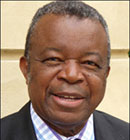
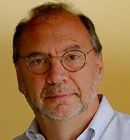
Virchow Prize 2026 has been jointly awarded to Dr. Jean-Jacques Muyembe-Tafum, MD, PhD, Director of the Institut National pour la Recherche Biomédicale in the Democratic Republic of Congo and Professor at University of Kinshasa, and Peter Piot, MD, PhD, Director of the London School of Hygiene & Tropical Medicine and Professor at University of Washington School of Public Health for exceptional work on Ebola. The international award recognizes their pioneering and enduring leadership in the discovery, control, and understanding of epidemic threats, and also for their efforts in advancing multilateral cooperation and governance that have strengthened global preparedness in the face of infectious disease outbreaks. This year, 2026, marks both 50 years since the emergence of Ebola and a renewed confrontation with the virus through the current outbreak. The careers of both scientists, according to the award committee, are anchored in a defining moment of modern infectious disease history: the first identified Ebola outbreak in 1976. Their collaboration demonstrated the necessity of crossing contextual, disciplinary and geographic boundaries. By awarding the Virchow Prize 2026 equally to Muyembe-Tamfun and Piot, their achievements and their commitment to strengthening health systems and fostering global responsibility are honored.

Green tapped as CEO of NIH Clinical Center
Jonathan M. Green, MD, MBA, is the
NIH Clinical Center’s new Chief Executive Officer (CEO). In this role, he will oversee the center's nearly $700 million annual operating budget and day-to-day operations of the 200-bed, 870,000-square-foot facility that saw more than 3,000 inpatient admissions and nearly 72,000 outpatient visits last year. Green joined NIH in 2018 as Director of the NIH Office of Human Subjects Research Protections, where he led the consolidation of 12 Institute and Center-specific Institutional Review Boards (IRBs) into a single IRB serving the entire NIH intramural research program. Prior to NIH, he served as Professor of Medicine, Pathology, and Immunology and Associate Dean for Human Studies and Executive Chair of the IRB at Washington University School of Medicine in St. Louis. Green’s research explored the molecular mechanisms of T cell activation. He received his medical degree from Wayne State University and then completed residency training at Boston City Hospital, a fellowship in pulmonary and critical care medicine at the University of Michigan Medical Center, and post-doctoral training at the University of Chicago. He continues to serve as an attending physician in the Medical Intensive Care Unit and Pulmonary Consult Service at the Clinical Center with board certification in internal medicine, pulmonary diseases, and critical care medicine. The Clinical Center, the world’s largest research hospital, is adding 570,000 square feet to the NIH’s Bethesda campus footprint, an expansion that is expected to be completed in 2029.

Clemens, Holmgren named co-winners of 2026 Gairdner Global Health Award
John Clemens, MD, and Jan Holmgren, MD, PhD, are co-recipients of the
2026 John Dirks Canada Gairdner Global Health Award for advances in understanding cholera disease and immunity, and for the development and evaluation of safe, effective, and affordable inactivated oral cholera vaccines that have enabled cholera control worldwide. Clemens, an epidemiologist, and Holmgren, an immunologist, have worked together for over 40 years.
Clemens is Senior Scientific Advisor to the Director General, International Vaccine Institute (IVI) in Seoul, South Korea and Adjunct Professor of Epidemiology, UCLA Fielding School of Public Health in Los Angeles. He designs, conducts, and analyzes large population-based epidemiologic studies and vaccine field trials in low-income countries, as well as developing new methodologies for the clinical evaluation of vaccines. A graduate of Stanford, he received his medical degree from Yale University. From 1983 to 1988, he served as a research scientist at the International Centre for Diarrhoeal Disease Research, Bangladesh (icddr,b). After returning to the United States, he held senior positions at the University of Maryland and the National Institutes of Health. In 1999, he became the first Director-General of the International Vaccine Institute (IVI) in Korea, where he led the team that developed a killed oral cholera vaccine (Shanchol). In 2011, he moved to UCLA as Professor of Epidemiology and Founding Director of a new Center for Global Infectious Diseases. From 2013 to 2021, Clemens served as Executive Director of icddr,b and since then he’s worked at IVI. Clemens, who is credited with more than 500 peer-reviewed publications, received the 2010 Sabin Gold Medal.

Holmgren is a Senior Professor at the University of Gothenburg in Sweden. After completing his medical and research training, he served as a scientist at the Swedish Medical Research Council from 1970 to 1980. He’s published more than 600 papers in microbiology, immunology, and vaccinology. Among his achievements with colleagues, Holmgren discovered the AB subunit structure and function of cholera toxin; identified the cholera toxin receptor; explained the key immune mechanisms and protective antigens in cholera; defined mucosal immunization routes for targeting immunity to specific sites; developed the first effective oral cholera vaccine, Dukoral; and aided the technology transfer that enabled local cholera vaccine production in Vietnam and later in India. Holmgren, an elected member of several scientific academies, has served on the boards of numerous national and international organizations, including Gavi, icddr,b, and IVI. He’s received numerous scientific awards, including the Sabin Gold Medal.

Stuart, Wutich elected to National Academy of Sciences
The
National Academy of Sciences elected 120 new members plus 25 new international members in recognition of their distinguished and continuing achievements in original research. Among its new members, the Academy recognized two researchers who work in the field of global health.
Kenneth Stuart, PhD, is a National Institute of Allergy and Infectious Diseases grantee who works in the area of malaria. Stuart is a Professor in the Departments of Pediatrics and Global Health in the Schools of Medicine and Public Health at the University of Washington. He also serves as a principal investigator in Seattle Children’s Research Institute's Center of Global Infectious Disease Research and an affiliate investigator in the Vaccine and Infectious Disease Division at the Fred Hutchinson Cancer Center. A graduate of Northeastern University, he earned an MA in Biology from Wesleyan University and a PhD in Zoology from the University of Iowa. He conducted postdoctoral research at the National Institute for Medical Research in London and at SUNY Stony Brook before becoming an Assistant Professor of Biology at the University of South Florida. Later, he founded the Seattle Biomedical Research Institute that merged with Seattle Children’s Research Institute. His expertise is in molecular and cell biology, immunology and host-pathogen interactions with a focus on protozoan pathogens.

Amber Wutich, PhD, is a Regents Professor, President’s Professor, and Director of the Center for Global Health in the School of Human Evolution and Social Change at Arizona State University in Tempe. An expert on water insecurity, Wutich directs the Global Ethnohydrology Study, a cross-cultural study of water knowledge and management in more than 20 countries. Her two decades of community-based fieldwork explore how people respond, individually and collectively, to extremely water-scarce conditions. She leads Action for Water Equity, a participatory convergence study that develops collaborative water solutions with water-insecure U.S. communities, and Arizona Water for All, a participatory study that works with Arizona’s most water-insecure communities to improve household water security. An ethnographer and methodologist, Wutich has authored more than 200 papers and co-authored eight books. She also edits the journal
Field Methods and directs the NSF Cultural Anthropology Methods Program. Wutich is a MacArthur Fellow, and has been recognized with awards, including Carnegie CASE Arizona Professor of the Year.
Kaplan wins Pierre Galletti Award
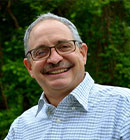
The American Institute for Medical and Biological Engineering (AIMBE) is proud to present its highest award, the
Pierre Galletti Award, to David L. Kaplan, PhD, Stern Family Endowed Professor of Engineering, Distinguished University Professor, and Professor in the Department of Biomedical Engineering at Tufts University. The award recognizes his pioneering work in silk-based biomaterials, translational impact on the biomedical sciences, and for his advocacy on behalf of bioengineers across all aspects of human health. His research focuses on biopolymer engineering, tissue engineering, regenerative medicine, and cellular agriculture. He has published more than 1,000 peer-reviewed papers and serves as editor-in-chief of the journal
American Chemical Society’s Biomaterials Science and Engineering. The Pierre Galletti Award, named after AIMBE’s Founding Member and Past President, recognizes a career-long commitment to advancing the field through transformative research, service, and advocacy.
Updated June 12, 2026
To view Adobe PDF files,
download current, free accessible plug-ins from Adobe's website.