NIH Websites Are Changing
My thoughts on entering another world and leading with optimism
September/October 2026 | Volume 25 Number 5
It is a good moment for me to reflect, having just finished my first three months as Fogarty’s Director. At the beginning of this year, I did not expect to join the NIH. The leadership position at Fogarty had opened up, and, to be honest, I’d always wondered whether I might truly consider it (if it happened to be available). So I sent a letter… and much has happened since then.
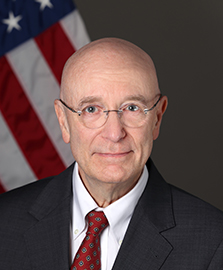 Read recent commentary on global health research issues from current and immediate past directors of the Fogarty International Center.
As a long-time Fogarty grantee, I felt distressed to watch each month as Fogarty funding opportunities appeared to decrease. Fogarty and, more generally, global health research seemed to be in trouble. Could I help change this course? I decided to accept the position in no small part because the leadership at NIH wanted me to do my best to help reposition our global health training and research programs for the coming years. Unusually, I asked, but was given no constraints on where I could take Fogarty.
It is quite a daunting prospect to look towards the next 10 years and consider: What are the best ways to position global health research and training for the future?
As a clinician, pediatric neurosurgeon, and investigator, I stumbled into global health research about 20 years ago. My colleagues and I recognized that an uncharacterized infection early in life was the underlying cause for the majority of children who needed hydrocephalus surgery in parts of East Africa. As I worked harder and harder (with multiple failures) to identify this cause, my determination to get answers turned into the focus of my professional life. Along the way, I developed increasingly close collaborative friendships with my African colleagues, built a strong team in the United States, and gradually put the pieces together to identify a new type of bacterial infection. After finding the cause, instead of drawing the project to a close, we realized that now we had to figure out how to prevent it and treat it more effectively to get acceptable outcomes.
To our great shock, now we are recognizing that, increasingly, these same destructive brain infections occur in children throughout the United States. Today I reviewed with my colleagues the most recent U.S. cases. Sadly, we don’t yet know the routes of infection in the United States where outcomes are currently no better than in Africa. There remains much to do.
Still, this is an example of the direct value, to Americans, of global health research — we only learned about this disease in the place where it is most prevalent…and we’ll only understand how to prevent and treat this disease by studying it in the place where it is concentrated and common.
The United States just celebrated the 250th anniversary of its founding — and also its bureaucracy. Coming on board at Fogarty for someone who has never before worked in the U.S. government can be quite the culture shock. It’s like entering another world if you have no prior experience with it. The saving grace of all of this is meeting the incredibly experienced, talented, and skilled staff. Although Fogarty is one of the smallest centers at the NIH, the dedication of its staff is incredible. They’ve worked intensely to ensure that we were able to get our full allotment of approved grants and investigators funded by the end of our fiscal year so they can pursue their research and training programs. Our staff feels very devoted to the investigators and young people we train. It motivates them strongly. It’s hard to describe just how much of a privilege it is to take the lead of such a team. I am keenly aware that I can’t let them down.
At the same time, I’m thinking, “What are the potential ways of forming new types of grants and new types of partnerships in global health training and research today?” The world is changing quickly at a societal and political level, and the challenges from diseases worldwide that hurt or take people’s lives prematurely are also changing. Obviously we cannot address everything, so I need to choose the areas of maximal impact combined with what is feasible and practical.
One good thing is that I’m getting no shortage of advice from many, many people. I’m doing my best to think about their suggestions and discuss them with our Fogarty team as well as NIH leadership. I very much hope that over the coming year, you will begin to see our strongest programs preserved, while new and exciting programs emerge. I will end by saying that I’m truly thrilled to be able to take my long years of both personal and career experience and bring that knowledge to the NIH at this time. I have a great deal of optimism for all that lies ahead.
Updated October 5, 2026
To view Adobe PDF files,
download current, free accessible plug-ins from Adobe's website.