NIH Websites Are Changing
Nutrition and weight gain in early HIV treatment outcomes
July/August 2026 | Volume 25 Number 4
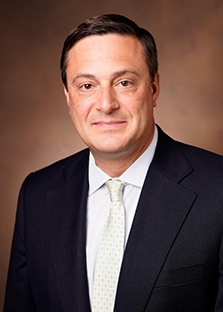
John R. Koethe, MD, chose the field of infectious diseases because it offers “breadth and possibilities” and opportunities for “patient-facing research.” In particular, the HIV epidemic captured his interest. He’d seen how HIV infections and related deaths crested in the United States during 1995, and a few years later when he began medical school, “U.S. deaths were no longer going up… and new drugs were being developed.” During his residency, he worked with HIV patients in Uganda at the Johns Hopkins Infectious Diseases Institute, which provided an introduction to the field of infectious diseases in an international setting.
After completing his education, he felt a hankering to return to Africa to study HIV. “For the first time, the Fogarty Fellows and Scholars Program [now called LAUNCH] was offering post-residency fellowships,” says Koethe. He applied and won a spot in the transformative program.
Research challenges
“Zambia was one of the epicenters of the HIV epidemic in sub-Saharan Africa. HIV prevalence in Lusaka [Zambia’s capital] was over 15% and rising,” says Koethe. The country had few resources, yet it was “extremely stable” and “had a great deal of leadership interest in building a world-class health system.” Zambia was establishing new clinics and expanding access to antiretroviral therapy (ART) to about 10,000 new patients each month. Koethe saw a rare opportunity “to have an impact and also be part of one of the largest health initiatives in recent history.”
For his Fogarty project, he proposed a study at the intersection of malnutrition and HIV, which involved delivering food aid through Lusaka’s HIV clinics, while looking at health outcomes in patients who’d initiated ART. In 2008, Koethe flew from the United States to Lusaka. Unfortunately, when he arrived, he found that his proposed Fogarty project had been canceled due to a lack of funds. Koethe quickly pivoted to an analysis of the factors driving early mortality in HIV patients (after they began ART) using Zambia’s National HIV Database. This idea was based on what he’d seen: half of patients with a body mass index of less than 16 (reflecting severe malnutrition) either died or were lost to follow-up (presumably dead) at 12 weeks after they started treatment.
His analysis of nearly 28,000 adults beginning treatment found the greatest improvement in clinical outcomes (the changes in health, function, or quality of life that result from treatment) among people with a
BMI of less than 16. Within this same group, those who failed to gain weight six months post-ART showed a nearly 10 times increased risk of dying compared to those who’d gained 10 kilograms (22 pounds) or more. In all BMI categories, individuals with a weight gain of at least 5 kilograms (11 pounds) after six months of treatment had better outcomes than those who didn’t gain weight.
Fellowship benefits
Koethe’s Fogarty project resulted in the publication of a number of peer-reviewed papers and provided him with “tremendous mentors,” who helped him crystallize his area of interest. Arguably, the most important outcome of his project was that it evolved into a 1,800-participant clinical trial in Zambia (“NUSTART”) funded by the European Union.
Koethe’s Fogarty-year experiences had convinced him that he might be seeing refeeding syndrome, “something we haven't seen on a large scale since World War II.” Some people who are drastically malnourished (as were many in World War II prison camps) and then quickly eat a lot of food will die within the next few days. Koethe explains that a sudden, large influx of carbohydrates requires a surge in metabolic intermediates to convert calories into energy, which in turn may destabilize cellular processes and lead to cardiac arrhythmias and other fatal conditions.
In Zambia, the appetites of extremely malnourished people with advanced HIV “came roaring back once they started treatment,” explains Koethe, yet often the only accessible food was corn, so they were suddenly eating “massive amounts of carbohydrates.” This could be the root cause of excess mortality, his NUSTART team theorized, so they randomized participants to receive either a peanut butter supplement alone or a peanut butter supplement plus phosphorus, magnesium, and potassium (to protect against sudden electrolyte shifts). Sadly, mortality remained high in both arms of this study for reasons unknown to this day.
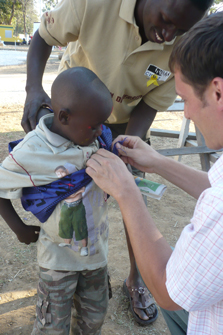 Photo courtesy of John KoetheJohn Koethe helps a child outside the Centre for Infectious Disease Research in Zambia
Atypical weight gain
Koethe says that malnourished Zambians who’d started ART often gained a lot of fat, but they “never really regained muscle mass. They also had high rates of diabetes and cardiovascular disease, despite their immune system fully recovering.” Weight loss (from untreated HIV) and weight gain after starting ART were not the same as dieting and then regaining weight, he concluded.
Returning home, Koethe “became interested in the obesity epidemic among individuals with HIV in the United States.” Initially, he looked at large databases—building on analytical skills he developed during his Fogarty year—to understand the predictors of ART-related weight gain. He found that individuals starting integrase inhibitor-based ART gained more weight than individuals taking the older classes of HIV drugs. “We were one of the first teams to show this,” he says. Similar reports from different research groups “got the field interested in obesity and HIV and weight gain” while also opening a discussion on the real problem of weight gain during treatment: “It's where that weight is deposited that matters.”
When an individual acquires HIV, there's a period of muscle loss and perturbations in the balance between lean muscle and adipose tissue (fat), says Koethe. This happens whether that person exhibits clinical signs of wasting (or is visibly malnourished) or not and “begins at the moment of HIV acquisition and may take different courses resulting in different phenotypes.” Some people begin ART and “go back to exactly the body composition they started with—they're rare.” By contrast other people’s bodies collect fat or lipids around the heart, the liver, the muscles, and the viscera. “After a short period, they may develop signs of cardiovascular disease, diabetes, or other complications.”
Koethe theorizes that “there's a very short window” where a modulation in diet, activity level, and rate of weight gain might help a person avoid an adverse phenotype after beginning ART.
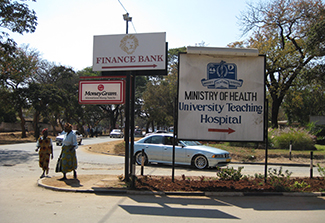 Photo courtesy of John KoetheAlong the way to the Ministry of Health University Teaching Hospital in Lusaka, Zambia
A goal in sight
Koethe believes that “overseas work is critical to improving the health of Americans—and not just Americans with HIV.” A lot of the lessons learned are valuable to the general population, particularly the aging population with high rates of overweight, obesity, and frailty. Working abroad in different contexts sheds more light on a research topic, says Koethe. In Zambia, for example, diets and activity levels are different than in the United States; people also encounter dissimilar environmental pollutants. Studying the same topic in two or three different countries helps researchers understand whether outcomes are due to a disease process and its direct effects on physiology and biology… or due to health habits or the environment. “If it's an environmental or dietary problem, then you modify that. But if it's a physiologic process, common to everyone across different countries, that requires deeper investigation to really understand the biological pathways.”
Currently, the National Institute of Allergy and Infectious Diseases is supporting Koethe’s work across a range of HIV topic areas through the Tennessee Center for AIDS Research (CFAR), a program that goes back almost four decades. There are 19 CFARs networked across the country all aiming to advance impactful HIV science readily translatable to human health.
Koethe says, “HIV was the great global pandemic of the late 20th century, and it's going to remain one of the great pandemics of the 21st century. We've had tremendous success over the last 40 years, but this requires continued investment, continued commitment, and continued attention.”
More information
Updated August 14, 2026
To view Adobe PDF files,
download current, free accessible plug-ins from Adobe's website.
Related Fogarty Programs
Related World Regions / Countries