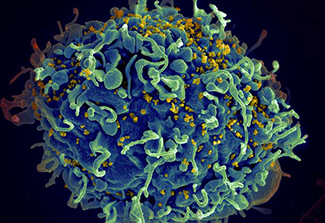
An estimated 40.9 million people globally are living with human immunodeficiency virus (HIV), first identified in the early 1980s. Remarkable scientific progress over four decades has led to the development of effective antiretroviral therapy (ART), which has transformed what once was considered a death sentence into a manageable chronic condition. In response to effective treatments and strategies, health care systems have begun to change; people living with HIV, once considered “too complex” for primary care, are returning to that setting.
Read series
Long-acting PrEP options now include lenacapavir, widely considered an exceptional drug. Lenacapavir was developed by Gilead Sciences, Inc. based on early-stage science conducted by academic investigators and research networks funded by NIH. It is an antiretroviral delivered as a shot just twice-yearly.
Read full article
Dr. John Koethe, Professor, Division of Infectious Diseases, Vanderbilt University Medical Center, and Director, Tennessee Center for AIDS Research, analyzed the factors driving early mortality in HIV patients (after beginning ART) using Zambia’s National HIV Database.
Read full article
Important global research is supported throughout the National Institutes of Health. In early June, the National Institute on Drug Abuse (NIDA) presented its 2026 International Forum. The scientific meeting highlighted the range and quality of substance use and addiction research that is conducted around the world with support from NIDA.
Read full article

Benjamin Chi, MD, Department of Obstetrics and Gynecology and Department of Epidemiology at the University of North Carolina (UNC) at Chapel Hill, leads a research portfolio in Zambia and neighboring countries focused on the prevention of mother-to-child HIV transmission, HIV care and treatment, and maternal and child health. He also leads multiple global health research training initiatives.
Read full article
A Fogarty project headed by Humberto Lopez Castillo, MD, PhD, was inspired by recent studies suggesting that rates of metabolic syndrome—high blood pressure, high blood sugar, abdominal obesity, high triglyceride levels and low ‘good’ cholesterol levels—and cardiometabolic disease are “through the roof” among adults living with HIV.
Read full article
Donna Shelley, MD, Professor of Public Health Policy and Management at New York University, finds implementation science particularly relevant when integrating HIV and noncommunicable disease (NCD) care, which is the focus of her current Fogarty project in Vietnam.
Read full article
At the 2026 orientation for Fogarty’s Launching Future Leaders in Global Health Research Training Program (LAUNCH), NIH Director Jay Bhattacharya, MD, PhD, kicked off his fireside chat with Fogarty’s Director Steven Schiff, MD, PhD, by asking how Schiff came by his deep expertise in global health issues. “By accident,” said Schiff with a smile.
Read full article
Also In This Issue
Print This Issue
Print This Issue
Download and print: July / August 2026 Global Health Matters Printable PDF.
Note: While the PDF version of this issue is not 508 compliant, the web versions of all articles are compliant.
Subscribe
Subscribe to Fogarty's Global Health Matters newsletter.
Archive
Global Health Matters is produced by the Office of Communications at the National Institutes of Health's Fogarty International Center. For more information about Global Health Matters, please refer to our
Office of Communications page for contact information.
Permission to reprint Global Health Matters content: All text produced in this newsletter is in the public domain and may be reprinted. Please credit Fogarty International Center. Images must be cleared for use with the individual source, as indicated.
Updated August 25, 2026