NIH Websites Are Changing
Cheryl Macpherson, PhD: Bilingual ethics training in the Caribbean
March/April 2026 | Volume 25 Number 2
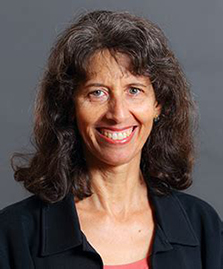 Cheryl Macpherson, PhD
Cheryl Macpherson, PhD, and the Caribbean Research Ethics Education Initiative (CREEi) team recently discovered how helpful AI tools can be when it comes to translations. Still she wonders, Can the Caribbean research community continue to use AI to its best advantage while remaining clear-sighted about its potential for harm?
Since 2014, CREEi has built research ethics capacity in many of the independent, low- and middle-income countries that border the Caribbean Sea: Antigua and Barbuda, Belize, Colombia, Costa Rica, Cuba, the Dominican Republic, Grenada, Guatemala, Guyana, Honduras, Jamaica, Mexico, Panamá, St. Lucia, St. Vincent and the Grenadines, Suriname, and Trinidad and Tobago. “We're really proud of the fact that CREEi works across all these countries, simultaneously in English and Spanish languages,” says Macpherson, professor emerita at St. George's University of Medicine in Grenada and a senior research fellow at the Windward Islands Research and Education Foundation.
CREEi’s certificate and master’s-level programs were developed by a partnership of three universities: St. George's University, Universidad Autónoma de Querétaro in Mexico, and Clarkson University in the United States. For its first cycle, CREEi developed one instruction package for the Spanish-language countries and another for the English-language countries, the latter overseen by Macpherson. In 2020, the program “united the two arms, teaching them together,” and providing all program materials in both Spanish and English and allocating one Spanish- and one English-speaking faculty to each course.
During this transition to a bilingual model, CREEi faculty used AI-assisted translation tools, yet still “reviewed and refined” all translations to ensure accuracy and cultural sensitivity. In this way, they modeled responsible use of AI for their students. “AI also helped the fellows to communicate across languages,” says Macpherson. A review she co-authored for the International Journal of Ethics Education notes, “Students interacted widely in discussion forums, often responding to peers in their non-native language.”
The Caribbean context is complex, with some countries appearing more valuable for a given research study than others when it comes to providing statistically robust data, says Macpherson. English-speaking countries have smaller populations and qualify less often for large, multi-site trials compared to the more populous, Spanish-speaking countries. They also have fewer IRBs that meet international standards than their Spanish-speaking neighbors. Regionally, some hope that AI may help ease the burden on IRBs, so they can be more efficient. “Fundamentally, they're all overstretched,” says Macpherson.
CREEi graduates now sit on research ethics committees and “some are concerned about AI issues in research ethics, because we've trained them to think critically about developments and advances,” says Macpherson. “There are people who say we need to use AI so that we can understand it and control it. I'm not sure I fully buy that argument.” Still what’s most important to her is knowing that former trainees have assumed leadership roles.
“It’s huge to have people who genuinely understand research ethics at North American and international standards in positions where they can help their countries and institutions.”
More information
Updated April 17, 2026
To view Adobe PDF files,
download current, free accessible plug-ins from Adobe's website.
Related Fogarty Programs
Related World Regions / Countries
Related Global Health Research Topics