NIH Websites Are Changing
Two global health research stars have changed pharmacology in Zimbabwe
July/August 2026 | Volume 25 Number 4
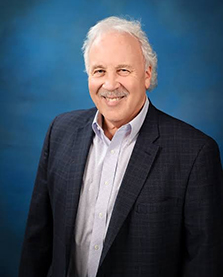 Photo courtesy of Gene Morse
Gene Morse, PharmD
Photo courtesy of Gene Morse
Gene Morse, PharmD
The HIV Clinical Pharmacology & Therapeutics Research Training (HIVRT) program is “a personal story,” built on the unique circumstances and long-standing friendship that created it, says Chiedza Maponga, PharmD, University of Zimbabwe (UZ) Faculty of Medicine and Health Sciences.
After Zimbabwe won its independence in 1980, Maponga studied clinical pharmacology at University at Buffalo (UB). He says, “The U.S. was helping Zimbabwe get on its feet and I was selected as one of the young people to get further education in the United States with the hopes that I would come back to Zimbabwe and become faculty.” Gene Morse, PharmD, FCCP, BCPS, then an associate professor and now the director of UB’s Center for Integrated Global Biomedical Sciences, became his mentor. Following UB, Maponga returned to his country, where he became a trusted national leader in the HIV epidemic.
Despite the workload, he maintained ties with his mentor. Frequently, they discussed the evolving HIV pandemic. “When triple-drug therapy came along, there was need for pharmacologists to intervene because the medications were complex and patients found it difficult to take. It was like a call to action for us,” says Maponga. Antiretroviral therapy (ART), the major advance in HIV treatment that began in 1996, typically combined three drugs: A protease inhibitor drug with two nucleoside reverse transcriptase inhibitor drugs. The different classes of antiretrovirals target different stages of the HIV lifecycle, so, when combined, they can suppress viral replication to undetectable levels. “We started collaborating and one thing led to another and eventually we applied for a Fogarty grant,” says Maponga.
Partners in innovation
The earliest version of what would become the HIVRT program was funded by Fogarty in 2007 as a supplement to an AIDS International Training and Research Program (AITRP) grant at the University of California, Berkeley. The supplement supported the team’s first two trainees and paved the way for Maponga and Morse to submit a joint grant proposal from UB and UZ. They received their own Fogarty funding in 2008 and eventually renamed the program.
Though they originally trained only master’s students, their subsequent proposals also included PhD and postdoctoral trainees. With each successive iteration of the HIVRT program, Morse and Maponga conducted a needs assessment to align their aims with Zimbabwe’s evolving needs. Initially, for example, they developed clinical pharmacologists capable of conducting research, building a laboratory to provide drug assays, and contributing to both research and education projects in HIV drug development and clinical pharmacology.
“As HIV has evolved, the ‘critical mass’ began to include people who knew about immunology, virology, biostatistics, cancer, the microbiome, and noncommunicable diseases,” explains Morse. Over time, then, the HIVRT program has built multidisciplinary teams, where the pharmacologists may be the central focus, yet collaborators are equally important, says Morse. In this way, they’ve laid a foundation for research within the Faculty of Medicine and Health Sciences at UZ, which in turn raises the competitive game of each individual scientist working there.
In addition to providing training, the HIVRT program also aims to foster “academic-public-private partnerships” to address UZ’s research goals. Current partners include Waters Inc. (Milford, MA), Well Cell Global (Houston), and MTE Group (Atlanta). Each of these biotechnology companies has agreed to contribute to the planning and development of Health Galaxy Park, a health care innovation and biomedical research center located in Harare, the capital of Zimbabwe.
This visionary project, based on infrastructure constructed by the HIVRT program, has become a national initiative, says Maponga. “We were given 50 hectares of land in an area where the capital city is planning a business district.” Morse adds, “There are 22 universities in Zimbabwe that can be linked to the network.” He believes future collaborations will not be limited to HIV research, but will address pandemic preparedness, leverage digital platforms for telehealth, and develop research ethics applicable to data handling and cybersecurity.
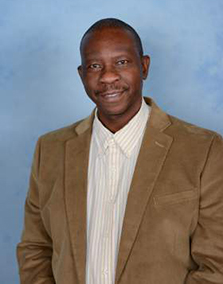 Photo courtesy of Chiedza Maponga
Chiedza Maponga, PharmD
Photo courtesy of Chiedza Maponga
Chiedza Maponga, PharmD
Two-way street
The HIVRT program undoubtedly benefits Zimbabwe, yet the United States reaps rewards as well, says Morse. For instance, it was in Zimbabwe that the team first embedded HIV researchers into organized support groups as a way to engage community members; later they translated this successful strategy to projects in the United States. The team working at UB also followed Zimbabwe’s lead in sharing and coordinating limited resources, including instrumentation and data.
Importantly, practices established in Zimbabwe to accommodate the everyday use of traditional medicines paved the way for important new protocols in the United States. Maponga, chairman of the Natural Therapists Council of Zimbabwe, estimates that between 70-80% of Zimbabwe patients report using traditional medicines (often before trying ‘western medicines’). It was natural, then, for the Zimbabwe trainees working in America to write up a complete history of all the non-prescription medications patients were taking, including over-the-counter medicines, vitamins, and supplements.
“What was going on in Africa was influencing the way we asked questions here,” says Morse. “All of a sudden, if you enrolled in a protocol sponsored by the NIH, there was a questionnaire about what non-prescription medications you take.” Soon, a database was built, which led to research projects examining how traditional or OTC medicines interacted with the antiretrovirals prescribed for people living with HIV. In addition, a whole new field evolved in the United States and Europe, where more sophisticated technology allowed for genomic sequencing and greater in-depth analysis of the mechanisms underlying drug interactions. “That led to knowledge of how grapefruit, for example, can interfere with statin metabolism, and prompted additional considerations for ART,” says Morse.
The use of antiretrovirals in Zimbabwe also revealed unexpected differences in absorption rates, metabolism, susceptibility to toxicities, and penetration into the brain. This also contributed to American scientific knowledge, says Morse. “In the 1990s and early 2000s, a lot of the rapid drug development through pharma was occurring in the United States and Europe." This meant many of the new medicines were tested mostly in whites. Later, when the drugs became available in Africa, Southeast Asia, South America, people with different genetic makeups were evaluated to see if they reacted differently. Researchers identified differences in drug tolerance related to genetics, nutrition (or malnutrition), lifestyle or environmental issues, and comorbidities, which led to better formulations and dosing protocols.
Looking to the future, Morse and Maponga believe Zimbabwe needs to develop leapfrogging strategies—bypassing the old in favor of the new—to get ahead. An example of leapfrogging would be the work of Admire Dube, an HIVRT postdoctoral fellow, who used nanotechnology to develop potent drugs, says Maponga. Dube’s trainee research proved that Zimbabwe, though it lacked a history of drug research and development, could enter a new arena within that field and, with the help of technology transfer, gain ground swiftly.
A leapfrogging approach that abandons the use of older HIV drugs in favor of the latest HIV drugs might also increase Zimbabwe’s ability to prevent HIV transmission and optimize patient outcomes, says Morse. The same strategy would be useful for other complex diseases, such as tuberculosis, and chronic diseases, such as hypertension and diabetes. “A little bit of priority shifting is what needs to be done, and the application of resources needs to be considered to make leapfrogging happen,” says Morse.
Testimonials
“I can trace some of the most defining moments of my career through the NIH Fogarty Research & Training programs. Perhaps the achievement I am most proud of has been helping to establish a clinical pharmacology laboratory from the ground up in Zimbabwe. My involvement in it has been incredibly rewarding. Fogarty programs have shaped me as a scientist and a leader, who is committed to strengthening research capacity, mentoring future investigators, and ensuring that rigorous clinical pharmacology research translates into better health outcomes for communities that need it most.”
- Takudzwa J. Mtisi, PhD, MBA
“I see my career as a journey shaped by the NIH Fogarty family. Through its HIV Research Training programs, I have grown from a trainee into a leader. The investment Fogarty has made in me extends far beyond technical skills. It has instilled a commitment to mentorship, collaboration, and conducting science that improves lives. I am proud to be part of a legacy that is building the next generation of global health researchers.”
- Tinashe Mudzviti, PhD candidate
More information
Updated August 14, 2026
To view Adobe PDF files,
download current, free accessible plug-ins from Adobe's website.