NIH Websites Are Changing
A Fogarty project in Panama aims to thwart cardiometabolic disease among adults with HIV
July/August 2026 | Volume 25 Number 4
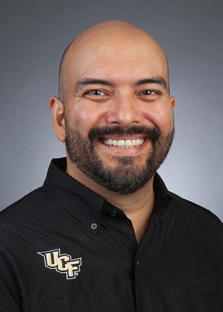 Photo courtesy of Humberto Lopez Castillo Dr. Humberto Lopez Castillo
Speaking other people’s languages is central to Humberto Lopez Castillo’s work as a researcher.
Scientists require data from different sources to conduct studies, so they “need to speak every language,” says Lopez Castillo, MD, PhD. “I need to convince the clinician, so I need to speak their language. I also need to convince participants, so I need to speak their languages as well.” Institutional review boards have their unique perspective… same for research assistants. “We also need to understand what's the point of view of administrators in the process of implementing a grant,” says the associate professor at University of Central Florida who’s also a certified Spanish English Medical Interpreter.
An expert communicator, Lopez Castillo put his skills to good use on a recent Fogarty project, Cardiometabolic Status of Adults Living with HIV in Colon, Panama.
Metabolic Syndrome
Adults living with HIV (ALWH) now enjoy longer, healthier lives, thanks to antiretroviral therapy (ART) and other public health interventions. Yet, recent studies of ALWH suggest that levels of metabolic syndrome and cardiometabolic disease are “through the roof,” says Lopez Castillo. (Metabolic syndrome is a set of five conditions—high blood pressure, high blood sugar, abdominal obesity, high triglyceride levels and low ‘good’ cholesterol levels—that increase the risk of cardiometabolic disease, which includes heart attack, stroke, diabetes, and kidney disease.)
Unfortunately, Panama, the country with the highest rate of HIV in Central America, does not routinely monitor cardiometabolic or other noncommunicable diseases among ALWH. So Lopez Castillo’s Fogarty project addressed this scarcity of clinical, laboratory, and epidemiologic data on metabolic syndrome among ALWH in Colon, Panama. The study first aimed to quantify the rate of cardiometabolic disease among ALWH and track its “natural evolution, without an intervention, over the course of a year,” explains Lopez Castillo. His team also hoped to describe and estimate the effect of different variables, including treatment, on the prevalence and course of cardiometabolic disease. Finally, they conducted two focus groups to gauge health care providers’ and patients’ responses to a metabolic syndrome intervention designed for ALWH yet integrated into the primary care system.
Findings
Lopez Castillo and his team concluded the project last year. Of 659 total recruited participants, 495, “a solid longitudinal cohort,” completed the entire study. The team estimated a 38.6% overall prevalence of metabolic syndrome among ALWH in Panama; 21.2% met three of the five diagnostic criteria, while nearly a fifth met four or all five criteria, signifying a pronounced risk of cardiometabolic disease.
“We also measured inflammation [a natural part of the body’s immune response], so now inflammation is part of the story we're trying to tell,” says Lopez Castillo. Specifically, his team looked at sensitivity to C-reactive protein, a standard measure of inflammation. His team found high sensitivity levels, which suggests chronic inflammation, despite many participants (80%) having undetectable HIV viral loads. ART itself, diet, stigma, chronic stress, and social determinants of health may all contribute to inflammation, explains Lopez Castillo.
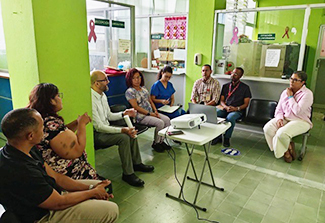 Photo courtesy of Humberto Lopez CastilloResearchers discuss their work with Dr. Lopez Castillo in a Colon clinic
Since the study’s completion, the team has published a paper and presented their results at conferences in the United States and in Panama, including at the Colon clinic/project site. Meanwhile, his team continues to work on a sophisticated analysis of the data in the hopes of harvesting more precise insights. Lopez Castillo says this is important because more than half of the participants were Afro-Caribbean, an understudied group.
Unsurprisingly, the non-numerical project data made its own lasting impression on the researchers. Lopez Castillo learned from providers in the focus group that they’d like to provide ancillary services for ALWH, such as nutrition counseling, but they feel stretched to the limit. “They have one infectious disease specialist and four general practitioners who’ve had in-house training in HIV (but they’re not certified specialists). One psychiatrist comes once a month for one day.” By contrast, focus group patients told “a story of stigma,” in which they’re “singled out and taken last” in OBGYN offices, emergency rooms, and at the dentist. Lopez Castillo says, “The clinic is their safe space, a stigma-free environment.”
Translating across cultures
Today Lopez Castillo is crafting two new proposals for further research in Panama. “One is for the integration of cardiometabolic health care into HIV primary care at four sites.” The second concerns the blood supply, which needs “a little bit of oversight and support.” His team has already strengthened a local Colon lab with resources from his Fogarty grant and “now we want to build a database of metabolic markers…it’s an opportunity to leverage the capacity that we’ve built.” His team also is exploring the interaction of PrEP drugs (pre-exposure prophylactics that prevent HIV, a type of ART) with GLP-1 drugs (glucagon-like peptide-1 receptor agonists that treat type 2 diabetes and help with weight loss). “We’re analyzing existing pharma datasets to understand the overall effect when you combine them…to see if it can flatten the curve of cardiometabolic disease that comes with HIV.”
Additionally, Lopez Castillo strives to transfer insights from his study in Panama to Florida. “For our project, One Heartbeat at a Time, we go to laundromats to meet people. They’re a captive audience! Their clothes are in the washer or the dryer, so, if they want, they can listen to our spiel and get on-site testing for blood glucose, lipids, and inflammation.” To accomplish this work, he’s partnered with grassroots organizations in Florida.
Even the best communicators need partners, explains Lopez Castillo. This is another lesson learned in global settings that he applies here at home. “Sometimes researchers cannot be trusted right away, so having a community person say, ‘Hey, these people are trustworthy, come join us’ is what’s needed.”
More information
Updated August 14, 2026
To view Adobe PDF files,
download current, free accessible plug-ins from Adobe's website.
Related Fogarty Programs
Related World Regions / Countries
Related Global Health Research Topics